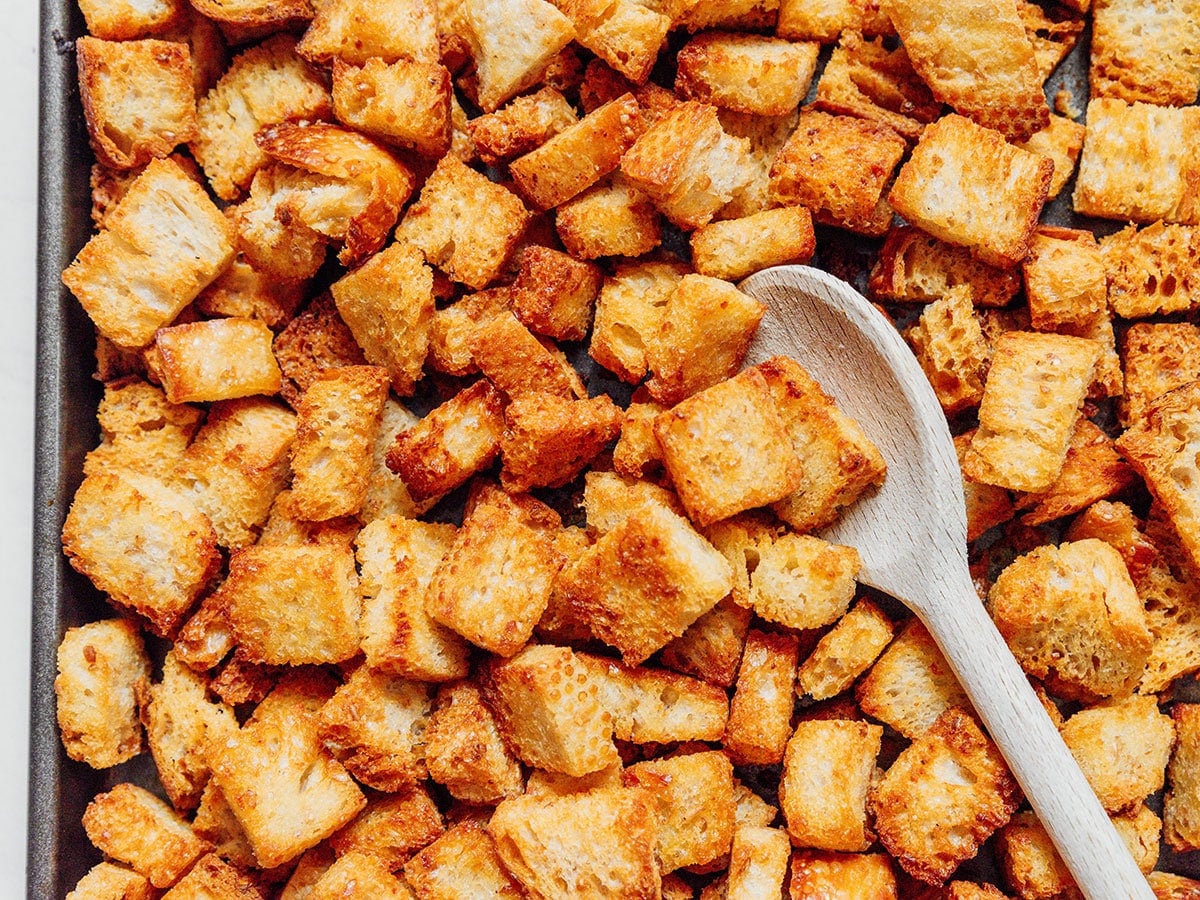
Imagine biting into a crouton that's not a rock-hard, flavorless nugget, but a burst of savory crunch that yields delicately, then melts in your mouth. If your only experience with croutons comes from a bag at the grocery store, prepare for a revelation. Learning how to make croutons at home is an absolute game-changer, transforming even the simplest salad into an extraordinary culinary experience. It’s so easy, so rewarding, and so incredibly delicious that you’ll wonder why you ever settled for less.
The first time many people try a truly homemade crouton, their reaction is often a resounding "WOW!" There's an immediate appreciation for the fresh taste, the perfect texture—a crisp exterior giving way to a surprisingly tender interior, a far cry from the dry, unyielding quality of most store-bought varieties. These aren't just crunchy bits; they're little pockets of seasoned joy. And the best part? Mastering how to make croutons is remarkably simple, offering endless possibilities for customization.
The Undeniable Superiority of Homemade Croutons
Why do homemade croutons beat their store-bought counterparts every single time? The answer lies in a combination of freshness, texture, and flavor control. Store-bought croutons are often designed for shelf stability, which typically means they are baked until bone-dry, resulting in a dense, hard, and sometimes stale-tasting product. They might have a long ingredient list, including preservatives and artificial flavors, which further detract from their natural appeal.
Homemade croutons, on the other hand, are a different beast entirely. When you bite into one, it doesn't just resist; it shatters with a delightful crunch, giving way to a slightly softer, almost "biscuity" interior. This unique texture is what sets them apart. They’re light, airy, and incredibly satisfying, rather than feeling like a chore to chew through. The freshness is paramount; made just hours or minutes before serving, they retain a vibrant flavor that's simply impossible to replicate in a mass-produced, packaged product.
Beyond the sensory experience, there's the unparalleled advantage of customization. When you learn how to make croutons, you're not just making a topping; you're crafting a personalized flavor bomb. You control the quality of ingredients, from the type of bread to the richness of the fat and the precise blend of seasonings. This control not only ensures a superior taste but also allows you to tailor them perfectly to whatever dish you're preparing, whether it's a light summer salad or a hearty winter soup.
Mastering the Art of Homemade Croutons: Your Essential Guide
The journey to perfect croutons begins with understanding a few key elements. You’ll be surprised at how forgiving and adaptable this process is, allowing you to create truly exceptional results with minimal effort.
Choosing Your Bread: The Foundation of Flavor
The beauty of homemade croutons is their versatility, starting with your choice of bread. While you can use almost any type, some yield superior results:
- Crusty Loaves: Breads like sourdough boules, French baguettes, ciabatta, or even country-style breads are fantastic. Their open crumb structure creates wonderful pockets for oil and seasoning to cling to, resulting in a more flavorful and textural bite. The irregular shapes when torn can also add a rustic charm.
- Stale is Great: Don’t throw out that day-old bread! Slightly stale or dried-out bread is actually ideal for croutons. It’s already partially dehydrated, meaning it will toast and crisp up faster and more evenly than very fresh, moist bread.
- Texture Options: You have a choice in how you prepare your bread:
- Cubes: Cutting bread into uniform cubes (typically 1/2 to 1 inch) provides a robust, consistent crunch and a neat appearance. They’re excellent for presentation.
- Torn Pieces: Tearing the bread into craggy, irregular pieces creates more delicate, whimsically shaped croutons. These offer more varied textures and additional nooks and crannies for seasoning, making them incredibly satisfying to eat. My personal preference often leans towards torn pieces for their unique mouthfeel.
- Size Matters: Remember that smaller bread pieces will bake faster than larger ones. Adjust your baking time accordingly to prevent burning.
The Golden Ratio: Fat and Flavor
Fat is essential for achieving that desirable golden-brown crispness and carrying flavor. The right amount and type of fat are crucial:
- Olive Oil: A classic choice, imparting a lovely fruity note and ensuring a crispy texture.
- Melted Butter: Adds a rich, nutty flavor and contributes to a beautiful golden color.
- A Mix: Many find that a combination of olive oil and melted butter offers the best of both worlds – the crispness of oil with the rich flavor of butter.
As a general rule of thumb, aim for about one tablespoon of fat per slightly heaping cup of cubed bread. This ensures adequate coating without making them greasy.
Seasoning Your Masterpiece: Customization is Key
This is where your croutons truly come alive. While salt is non-negotiable for flavor, everything else is an opportunity for creativity:
- The Essentials: Kosher salt (for better adhesion and flavor), freshly cracked black pepper, and garlic powder are fundamental for a classic, irresistible crouton.
- Parmesan Perfection: Freshly grated Parmesan cheese (or another hard, aged cheese with low moisture) adds a salty, umami depth and an extra layer of crispness. Add it along with the other seasonings, and it will toast beautifully.
- Herbaceous Heights: Experiment with dried herbs like rosemary, thyme, oregano, or a blend of Italian seasoning. Dried herbs cling well to the oiled bread and release their aromas as they bake.
- Spicy Kicks: A pinch of smoked paprika, cayenne pepper, or chili powder can add a subtle warmth or a fiery kick.
- Unexpected Twists: For a fun, "junk-food" vibe, try a sprinkle of ranch powder. Curry powder can introduce an aromatic, savory complexity.
Pro Tip: For an intensified flavor, consider lightly toasting your dried herbs or spices in the fat before adding the bread. This helps to bloom their aromas. Remember, the possibilities are vast, allowing you to tailor your croutons to any meal. For more ideas on perfecting your crouton flavor profile, check out our guide on Homemade Crouton Secrets: Texture Options & Flavor Boosts.
Two Simple Methods: Oven vs. Stovetop
You have two excellent choices when learning how to make croutons, depending on your batch size and preference:
The Oven Method (Recommended for Larger Batches)
- Preheat: Set your oven to 375°F (190°C).
- Season: In a large bowl, combine your bread pieces with the chosen fat (olive oil, melted butter, or both) and all your seasonings. Toss thoroughly until every piece is well coated. Don't be shy; get in there with your hands!
- Spread: Arrange the seasoned bread in a single layer on a large baking sheet. Crucially, give the croutons plenty of space. Overcrowding will steam them rather than crisp them, preventing that beautiful browning. Use two sheets if necessary.
- Bake: Bake for approximately 10-15 minutes, tossing halfway through. Keep a close eye on them after 8 minutes, as ovens vary. You're looking for a lovely golden-brown color and a satisfying crispness.
- Cool: Remove from the oven and let them cool on the baking sheet. They will crisp up further as they cool.
The Stovetop Method (Great for Smaller, Quick Batches)
- Heat Skillet: Place a large skillet (cast iron works wonderfully) over medium heat.
- Add Fat: Once hot, add your chosen fat. If using butter, let it melt and slightly foam.
- Sauté Bread: Add the seasoned bread pieces to the skillet. Don't overcrowd the pan; work in batches if necessary.
- Toss and Brown: Cook, tossing frequently with tongs or a spatula, until the croutons are evenly golden brown and crisp on all sides. This usually takes about 5-8 minutes.
- Cool: Transfer to a plate lined with paper towels (if desired, to absorb excess fat) and let cool.
Both methods yield fantastic results, offering different levels of convenience. For a deeper dive into optimizing your baking or stovetop technique, explore our guide on Make Perfect Croutons: Oven, Stovetop & Flavor Customization.
Beyond the Salad Bowl: Creative Uses for Homemade Croutons
While often associated with salads, your homemade croutons are far too delicious to be confined to just one dish. Their versatility makes them a fantastic addition to a variety of meals:
- Soup Topping: Elevate any bowl of soup, from creamy tomato to hearty lentil, with a handful of fresh croutons for contrasting texture.
- Snack Attack: Honestly, they're so good, they make a perfect savory snack all on their own. Keep a batch handy for when hunger strikes.
- Stuffing and Dressing: Torn croutons make an excellent base for homemade stuffing or bread pudding, adding depth and texture.
- Crumb Topping: If you have any leftover, a quick blitz in a food processor turns them into gourmet breadcrumbs, perfect for coating chicken, topping casseroles, or making a crispy pasta garnish.
- Garnish for Roasted Vegetables: Sprinkle over roasted asparagus, green beans, or Brussels sprouts for an added layer of flavor and crunch.
- Eggs Benedict Upgrade: Use them as a crispy base instead of English muffins for a deconstructed, textural twist on a classic breakfast.
To store your homemade croutons, allow them to cool completely, then place them in an airtight container at room temperature. They'll retain their crispness and flavor for up to a week, though they rarely last that long!
Learning how to make croutons is one of those simple kitchen skills that delivers immense satisfaction and noticeable improvements to your everyday meals. The journey from a humble slice of bread to a golden, crunchy delight is quick and easy, yielding a product that far surpasses anything you can buy in a bag. So, next time you’re pondering a salad or a bowl of soup, skip the store-bought hard rocks. Grab some bread, a good quality olive oil, and your favorite seasonings, and prepare to elevate your culinary experience with the irresistible charm of homemade croutons.
